Chemical abatement
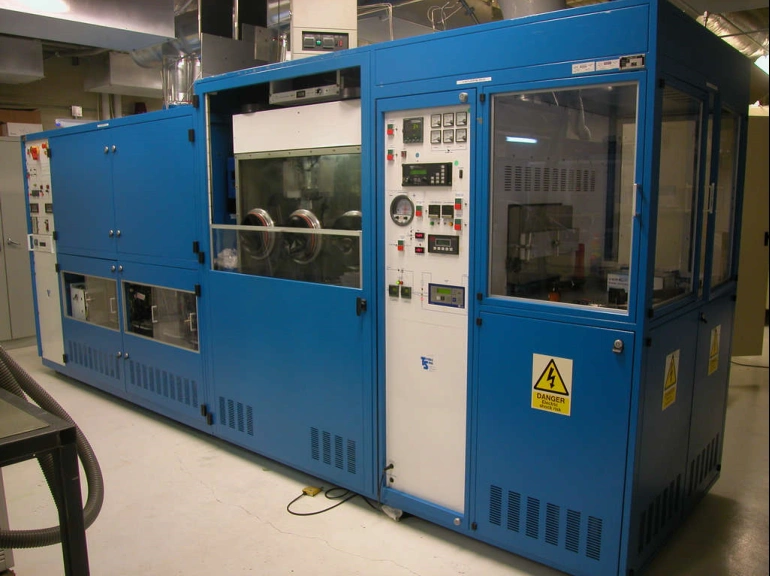
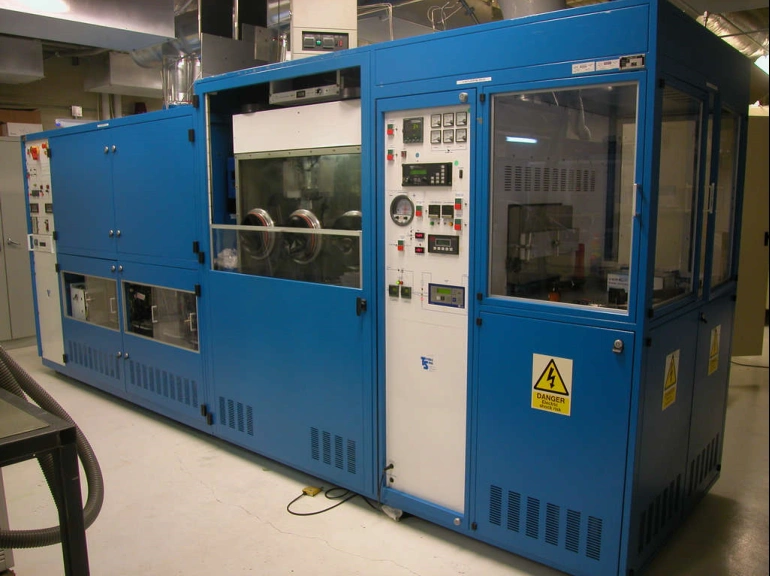
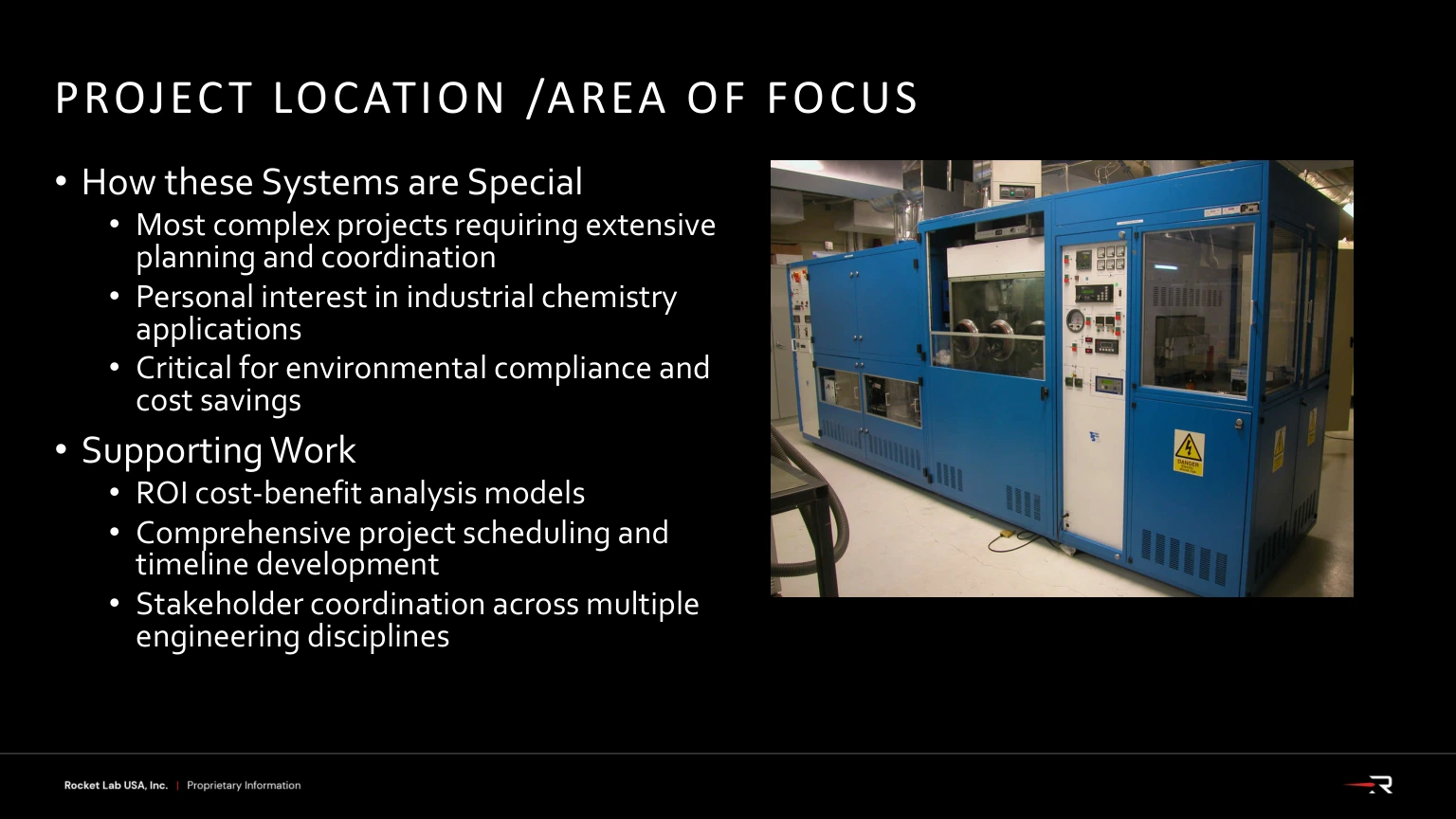
The showcase describes a burn-wet system for processing hazardous gases from manufacturing. My work included trial-equipment installation support and the associated containment, collection, and piping arrangements.
Rocket Lab / SolAero / Albuquerque, New Mexico / Summer 2025
Design. Coordinate.
Bring the pieces together.
My project-management internship at SolAero connected aerospace manufacturing with hands-on engineering: containment design, process analysis, equipment installation, and coordination across facility-upgrade projects.
01 / Internship context
SolAero offered a practical intersection between my background coordinating construction and my interest in building aerospace hardware.
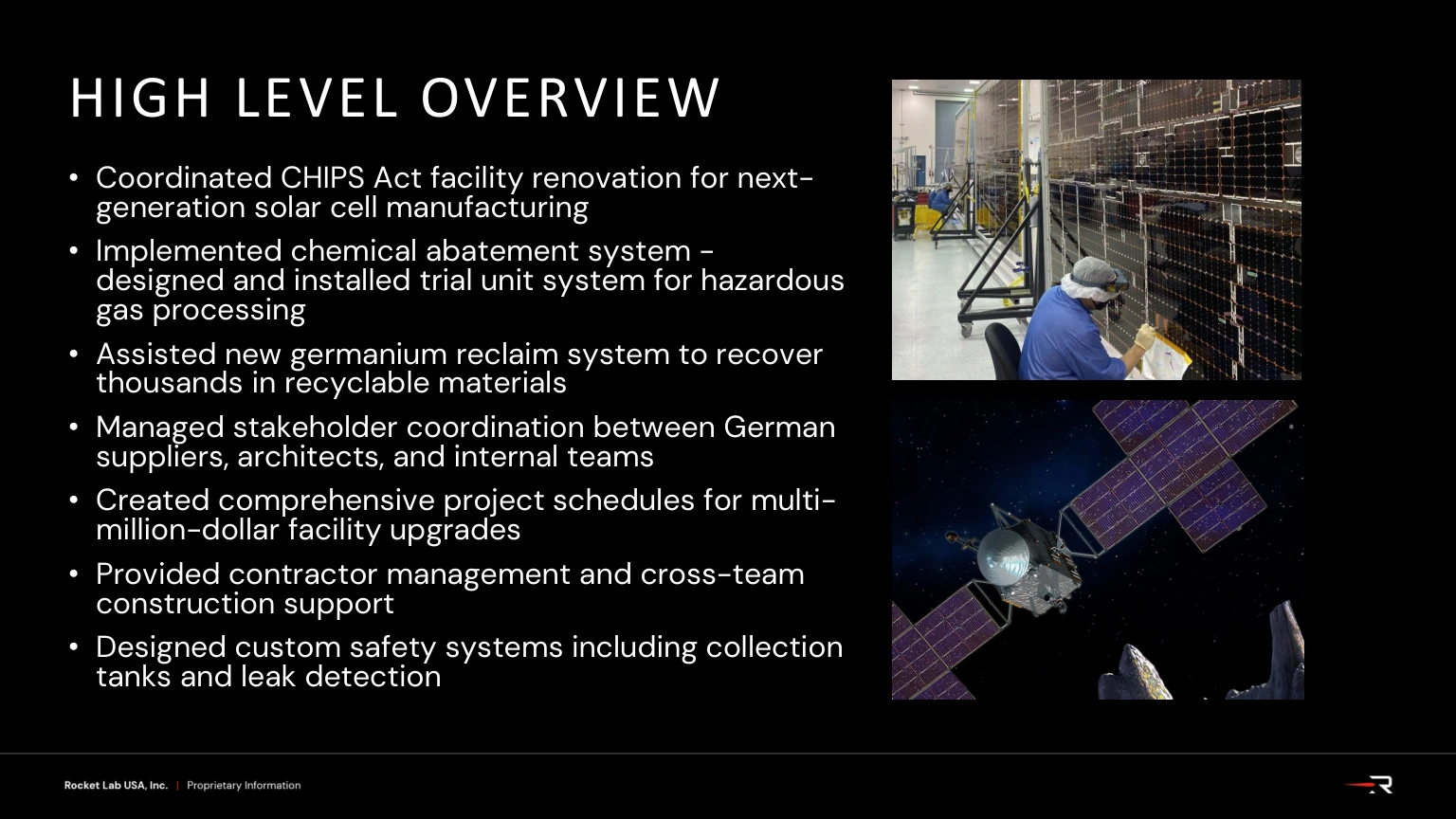
As a project-management intern, I supported facility renovations and equipment integration associated with CHIPS Act manufacturing upgrades. The work required understanding production needs and translating them into designs, schedules, contractor instructions, and coordinated decisions.
My contributions included custom containment equipment, Simulink analysis, construction packages, layout updates, project scheduling, and communication between internal teams and external partners.
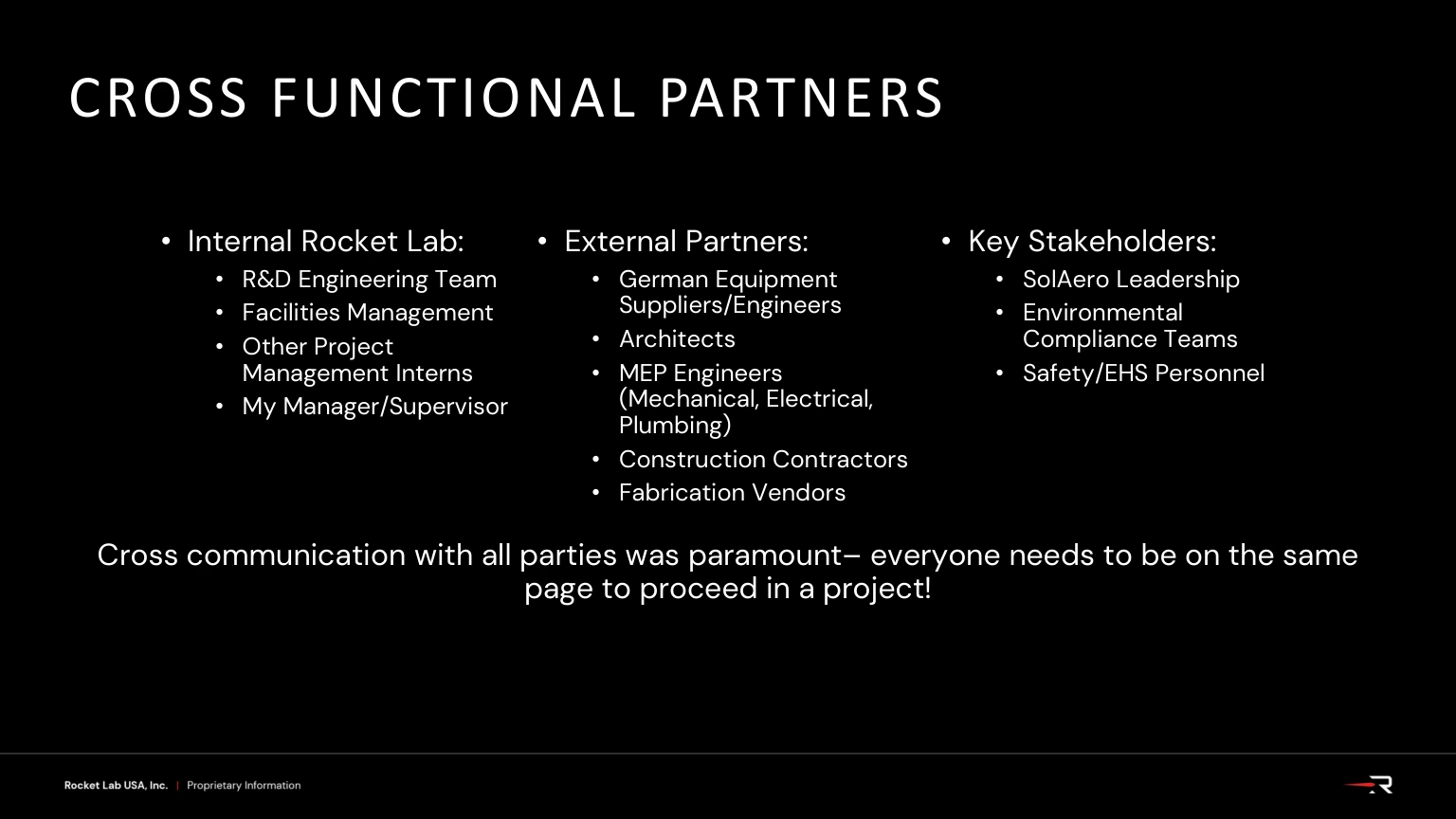
I contributed engineering and coordination work within an established team. The facility-upgrade program involved R&D, facilities, project management, equipment suppliers, architects, contractors, and safety and environmental personnel.
This case study is based on my August 2025 internship showcase. Its outcomes describe the work reported at that time.
02 / Manufacturing systems
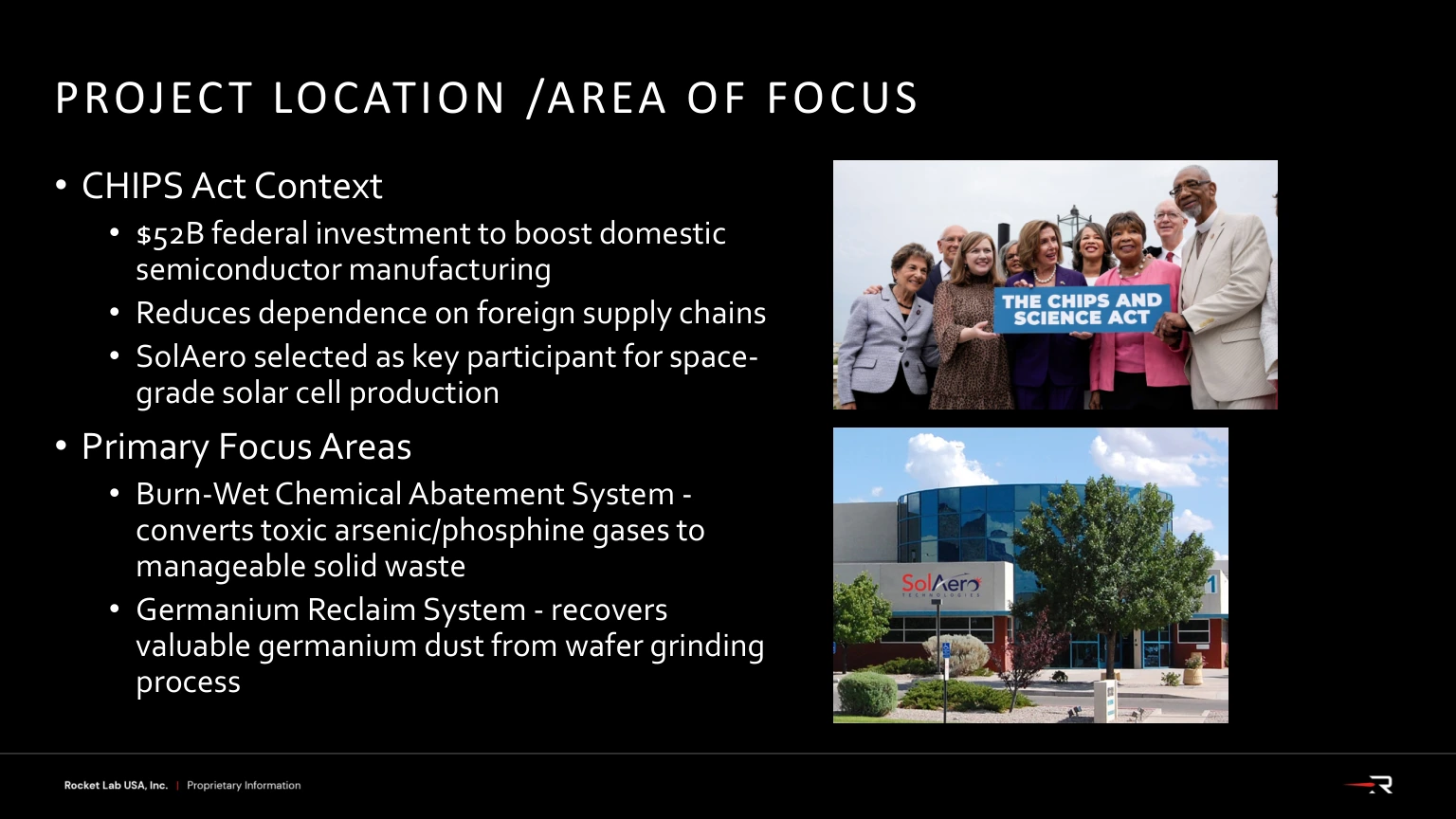
Two focus areas were chemical abatement and germanium reclaim. Both connected the manufacturing process with the facility infrastructure needed to operate it.
The showcase describes a burn-wet system for processing hazardous gases from manufacturing. My work included trial-equipment installation support and the associated containment, collection, and piping arrangements.
I assisted work on a system intended to recover valuable germanium material from wafer-grinding waste. This connected process changes with material recovery and cost-benefit analysis.
Facility tours and self-directed learning helped me understand semiconductor manufacturing. That context made it easier to connect equipment requirements with installation constraints and the needs of the people operating the system.
I also contributed to ROI models and logistics analysis. The presentation identifies recovery value and cost savings as goals, but does not provide a verified realized-savings total.
See the original presentation · slide 4 ↗03 / Mechanical design
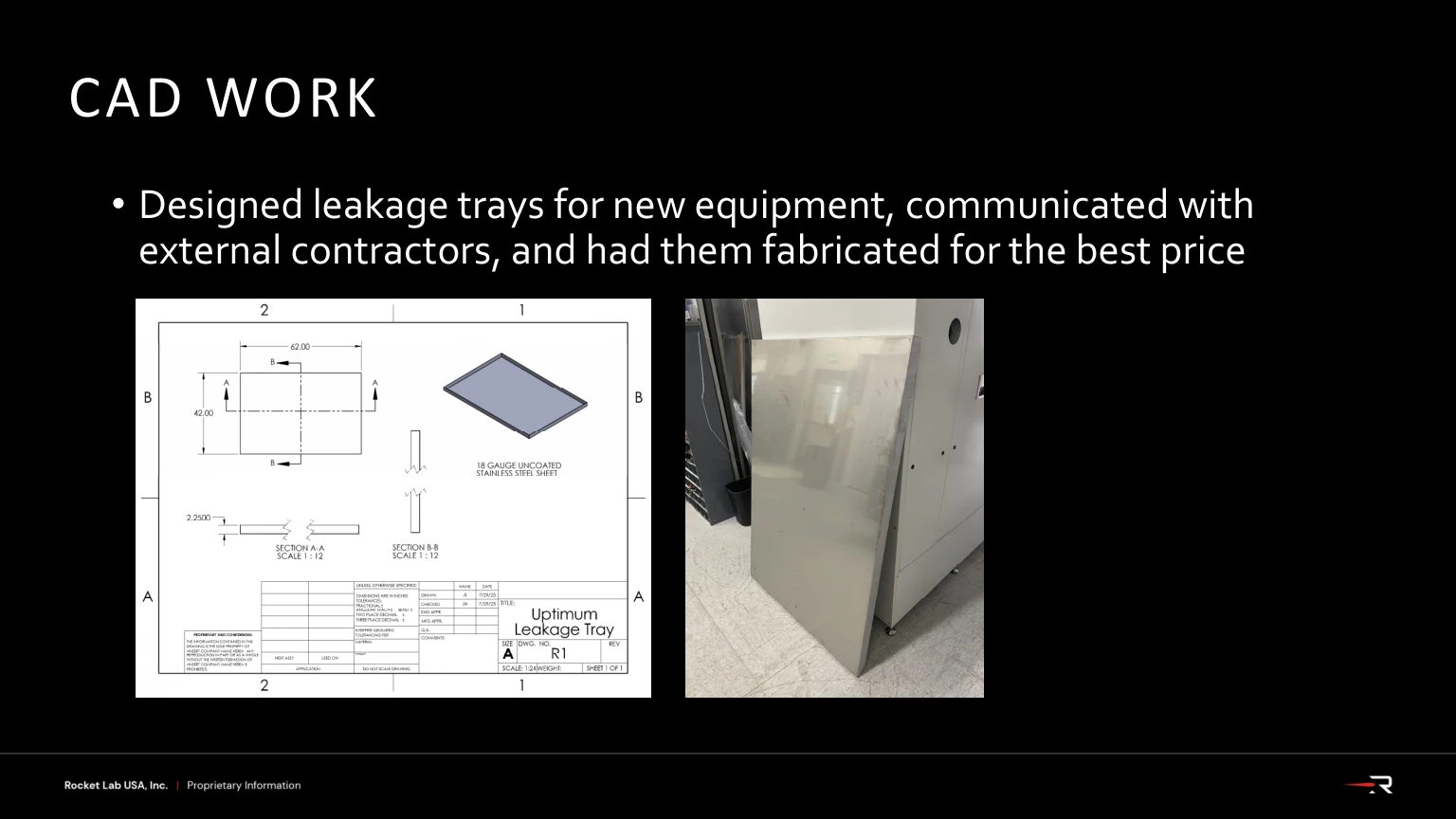
I designed leakage trays for new equipment and coordinated with external contractors to have them fabricated. The task linked CAD, equipment interfaces, material selection, pricing, and installation.
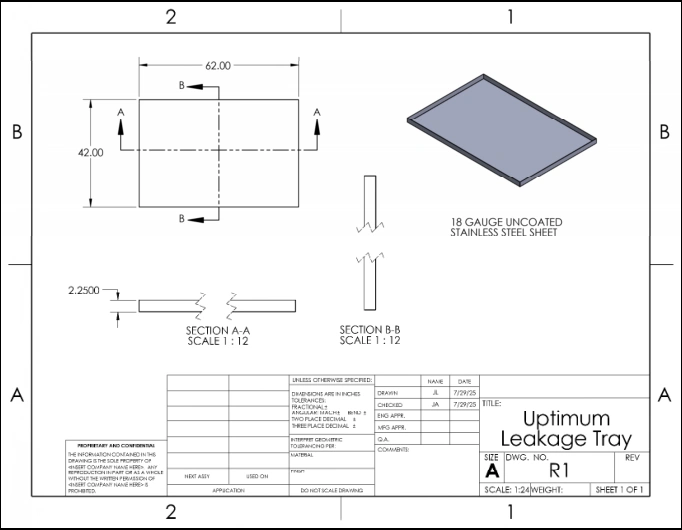
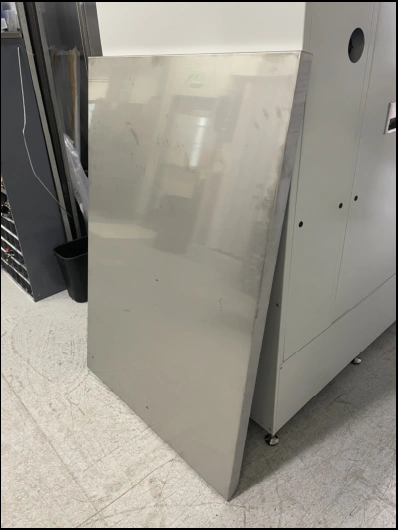
The drawing documents the tray geometry and sheet-metal construction. The installed photograph connects that design work to the equipment it supports.
A usable part also needed a fabrication route, a coordinated supplier, and a place in the installation sequence. Those practical steps were part of my contribution.
04 / Modeling & analysis
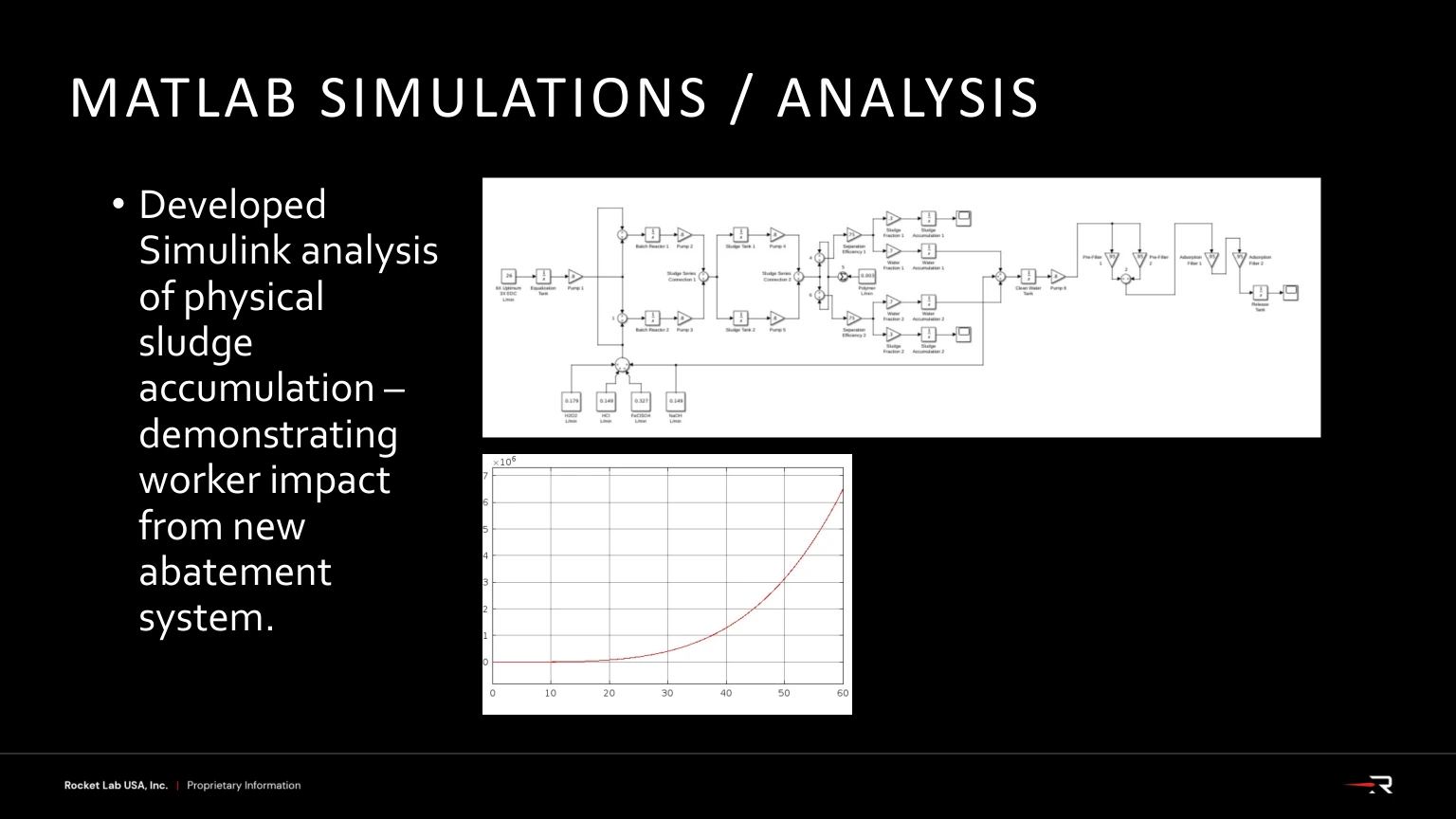
I developed a Simulink analysis of physical sludge accumulation associated with the new abatement system. The showcase presents this as a way to demonstrate the effect of the process change on workers and equipment operation.
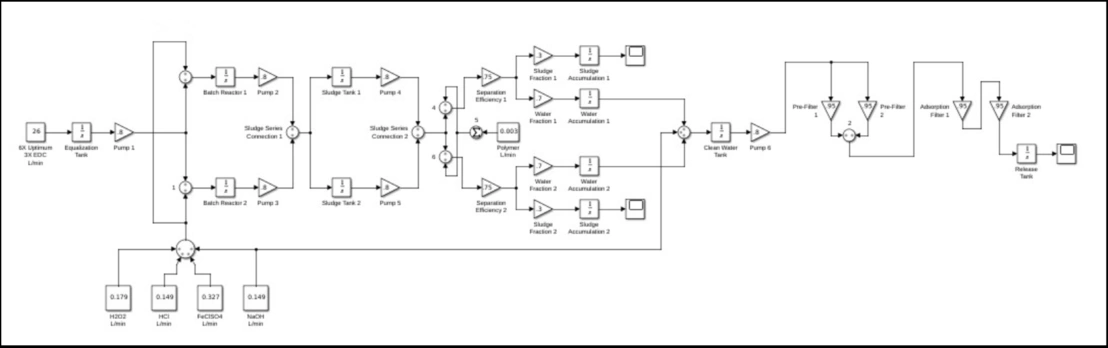
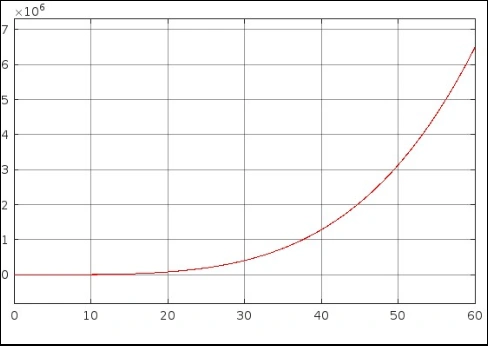
The block diagram and response plot show the analysis included in the presentation. The slides do not supply the full model, parameter definitions, or a quantitative validation record, so this page describes its purpose without inventing a measured reduction in workload or maintenance.
This work expanded the internship beyond scheduling: I was using engineering analysis to help communicate the implications of a manufacturing-system change.
See the original presentation · slide 9 ↗05 / Construction & integration
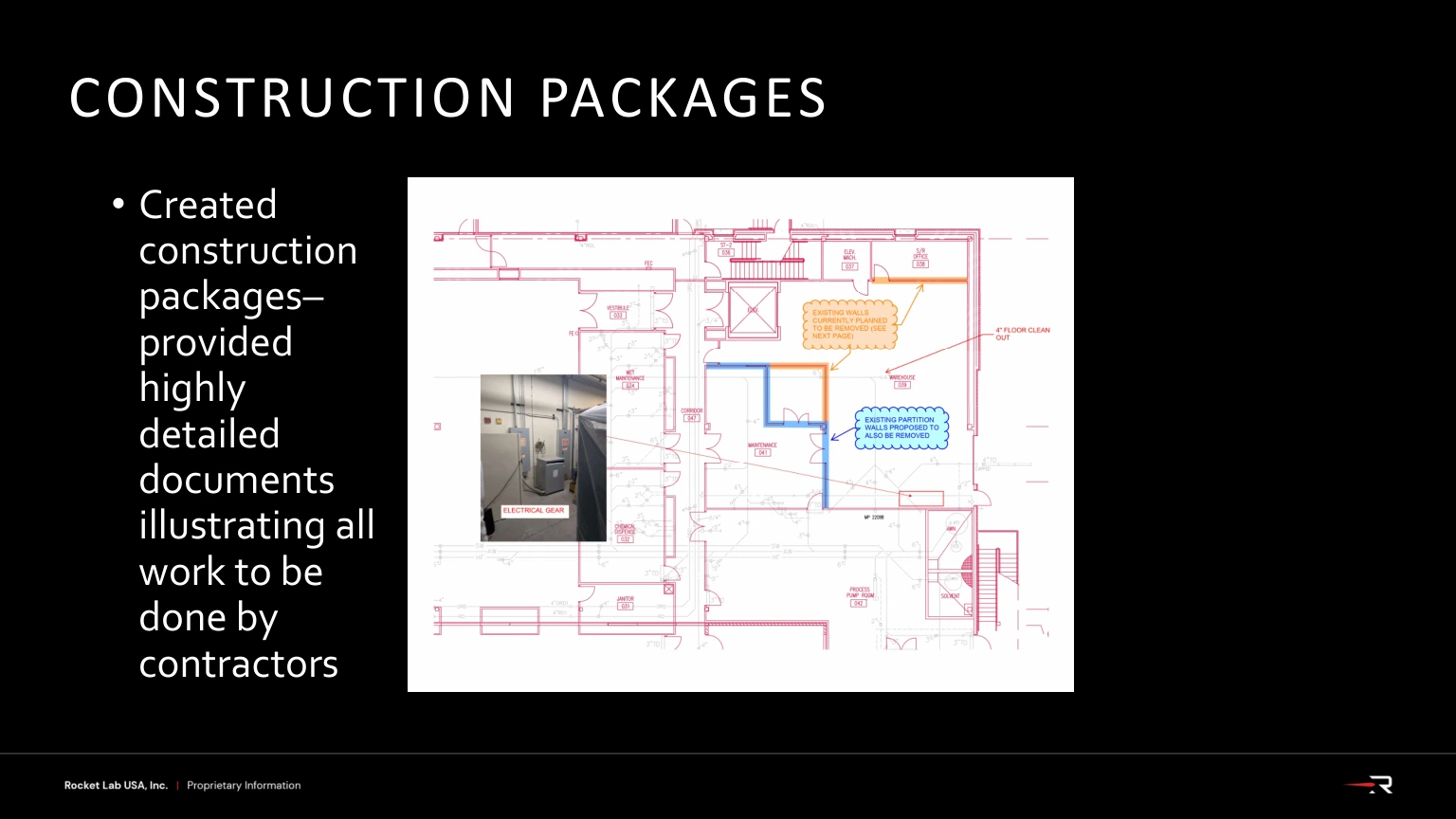
I created detailed construction packages to illustrate the work required from contractors. Annotated drawings connected the installation scope with equipment locations and practical site constraints.
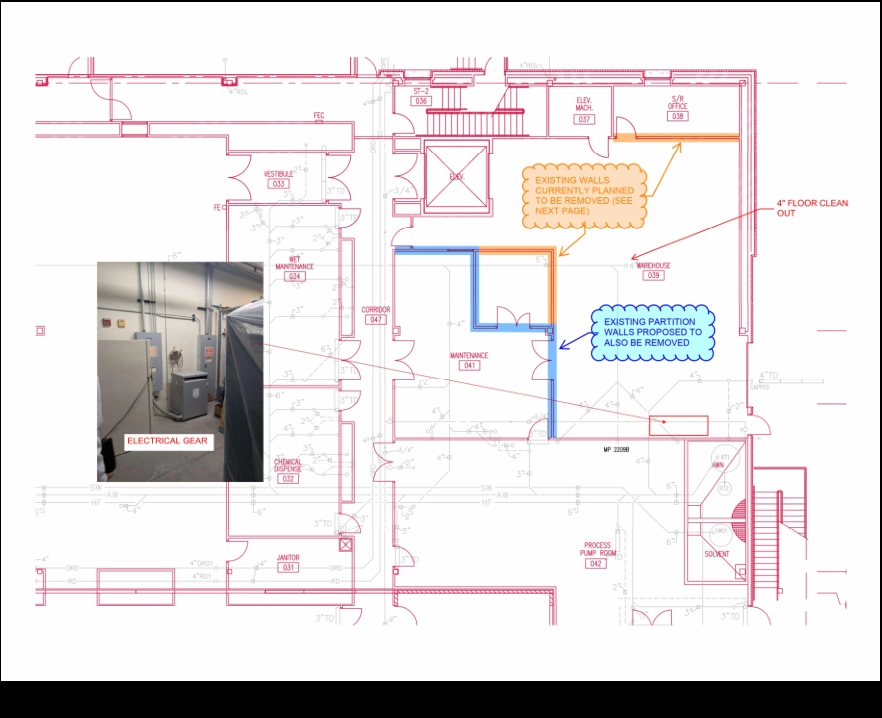
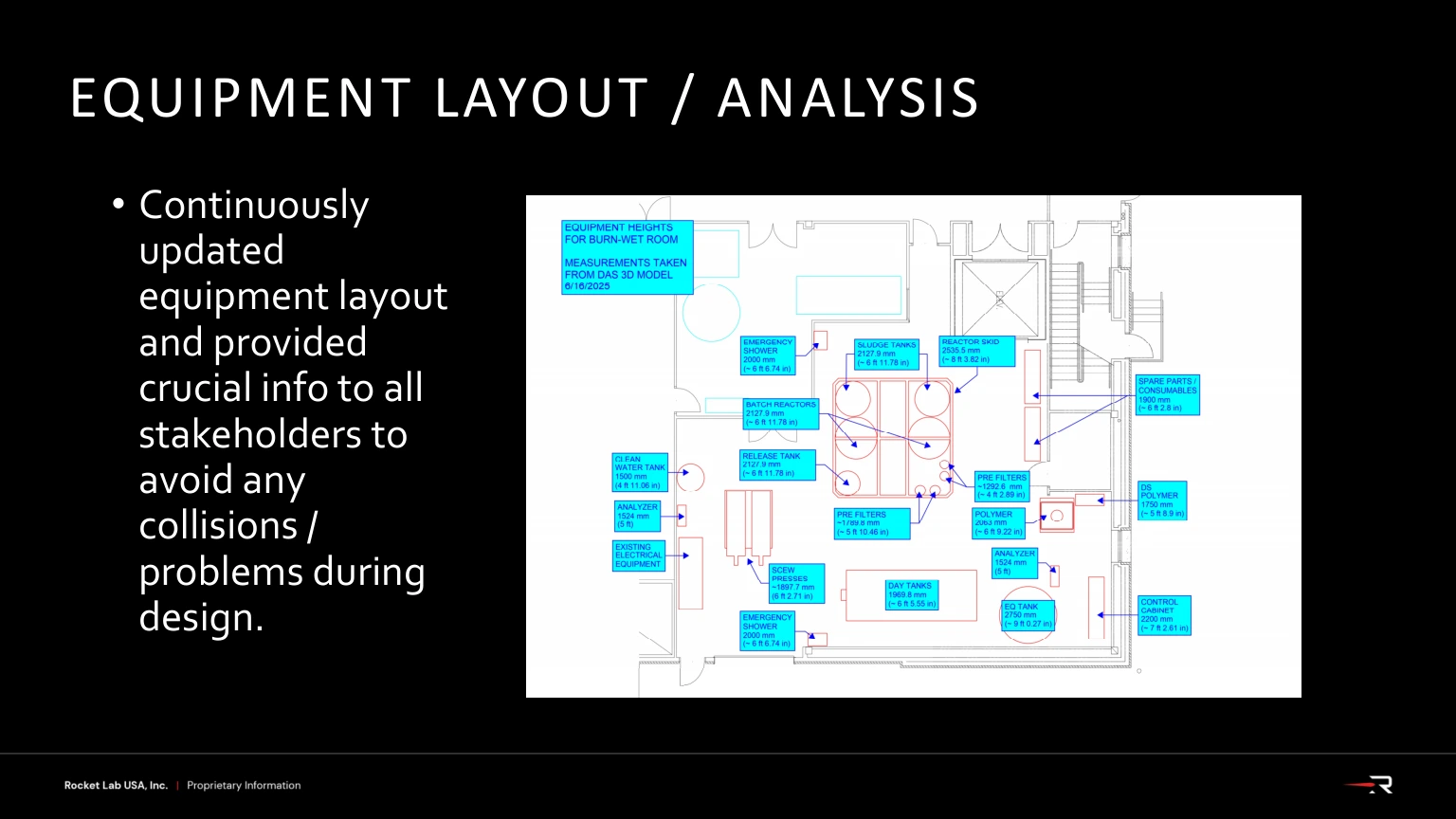
I continuously updated equipment layouts and shared information with stakeholders to identify potential collisions and installation conflicts during design.
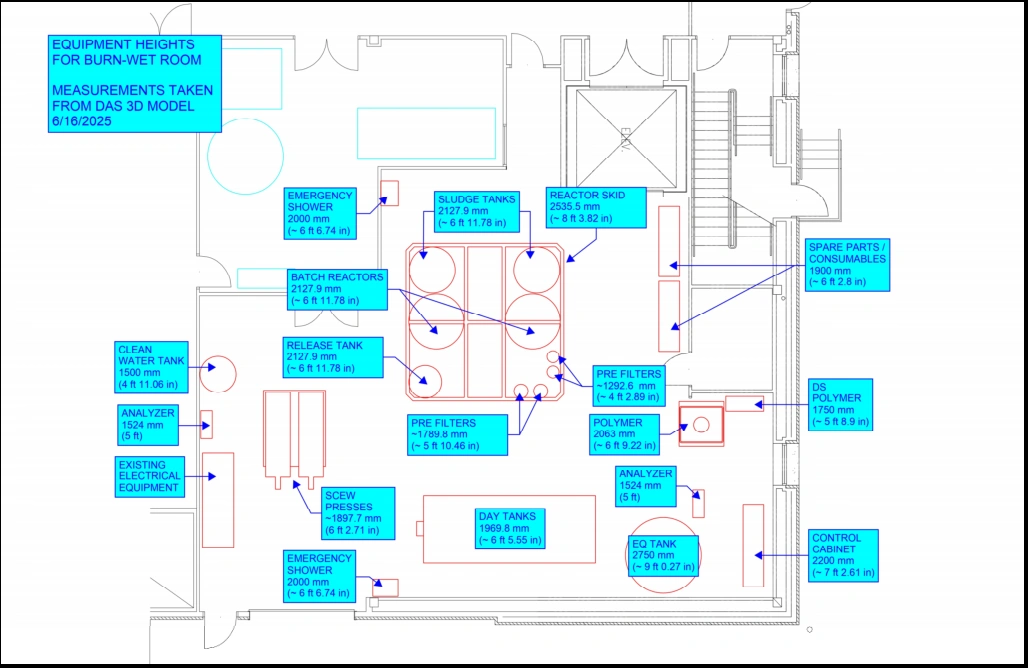
My work also included contractor coordination, site tours, and hands-on project assistance. These activities connected the documents to the actual sequence of work and helped surface questions between teams.
The packages and layouts helped make the same installation understandable to designers, suppliers, contractors, and the internal teams who would use the equipment.
06 / Scheduling & stakeholders
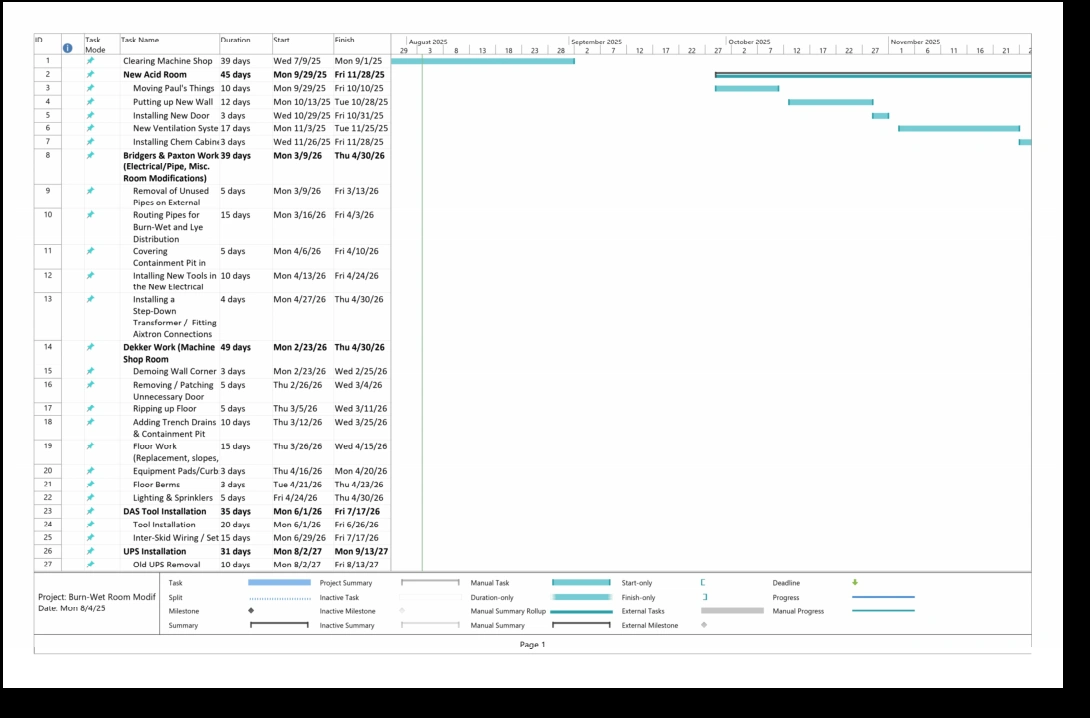
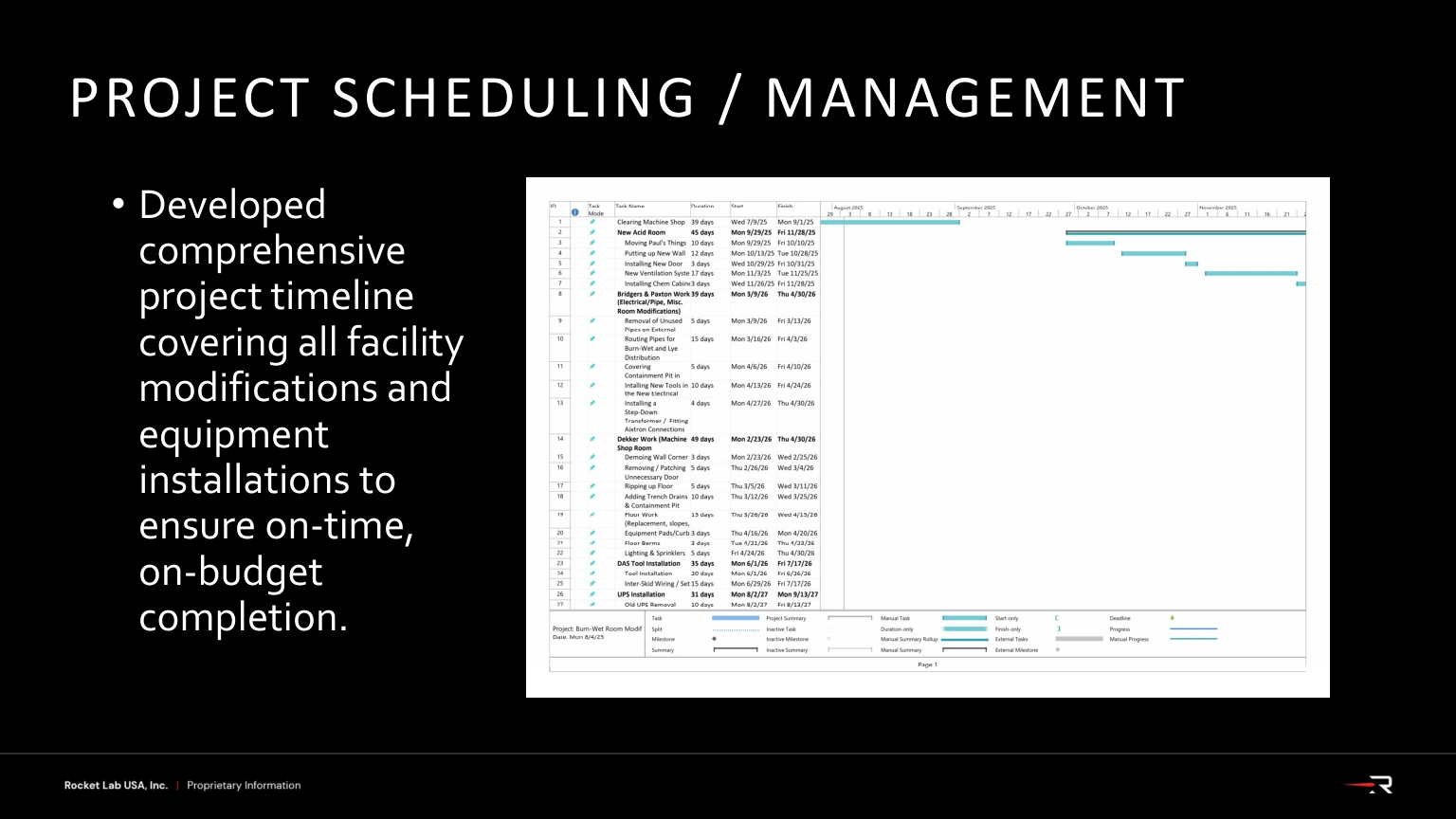
I developed a comprehensive timeline covering facility modifications and equipment installations. The schedule supported coordination of the work needed before equipment could be installed and used.
R&D engineering, facilities management, my supervisor, and other project-management interns.
German equipment suppliers and engineers, architects, MEP engineers, construction contractors, and fabrication vendors.
SolAero leadership, environmental compliance teams, and safety/EHS personnel.
Bring questions, drawings, site information, and schedule needs across those groups so decisions could move forward.
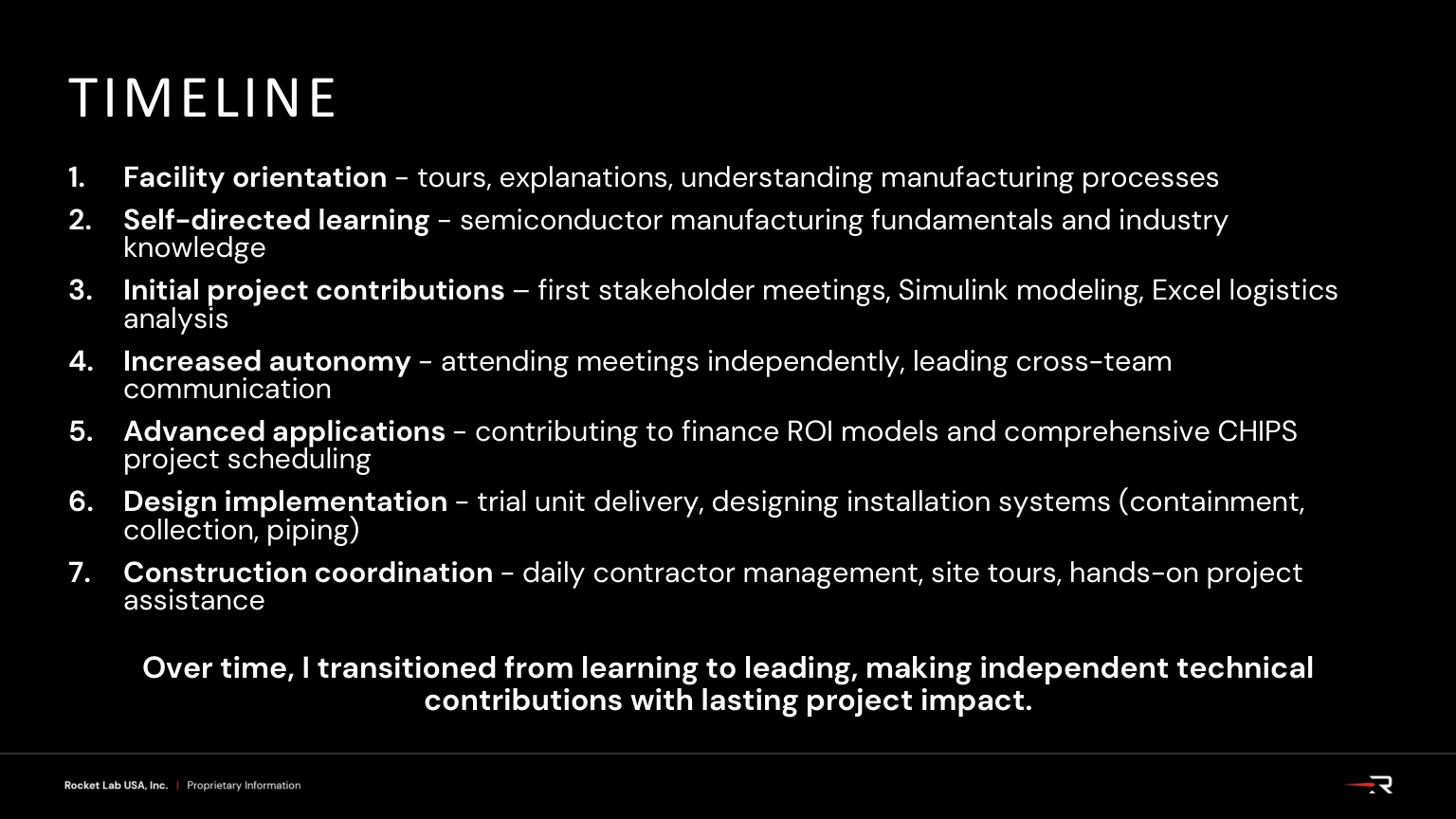
The showcase traces my progression from orientation and process learning to independent meeting participation, cross-team communication, analysis, installation design, and daily contractor coordination.
The timeline was intended to support on-time and on-budget execution. The presentation does not establish final completion or budget performance for the full facility program.
See the original presentation · slide 6 ↗07 / Outcomes & development
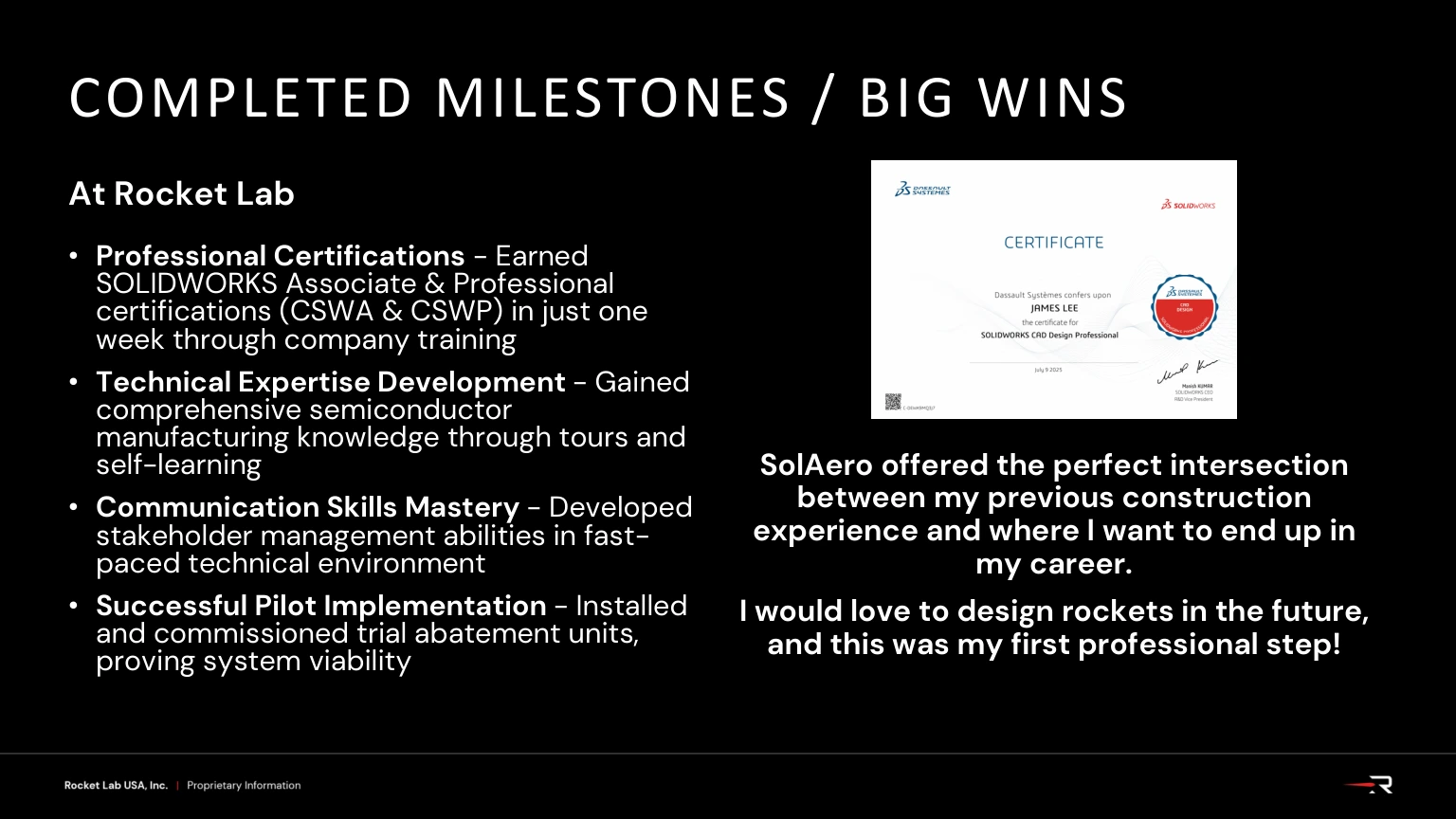
My showcase records the installation and commissioning of trial abatement units as an internship milestone. That represents progress on the pilot equipment, rather than a claim that every facility upgrade was completed during my internship.
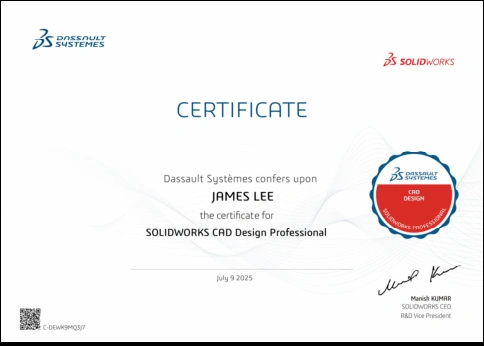
Through company training, I earned the SOLIDWORKS Associate and Professional certifications in one week. These complemented the CAD work I was applying to equipment installation needs.
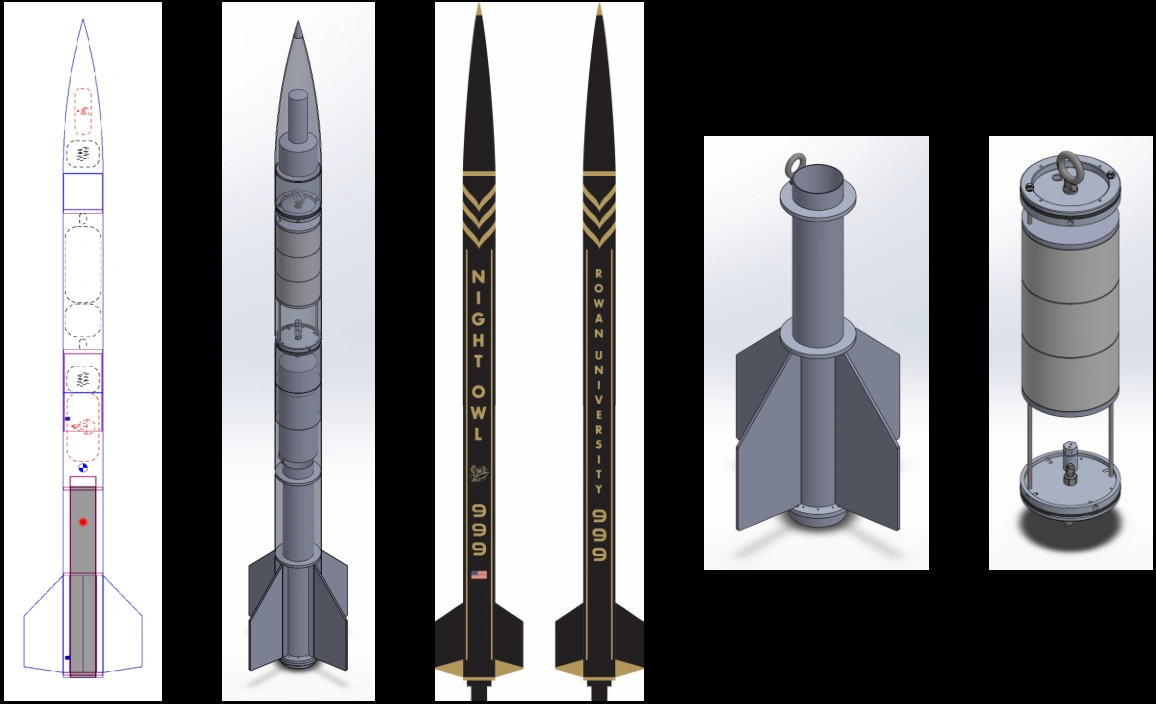
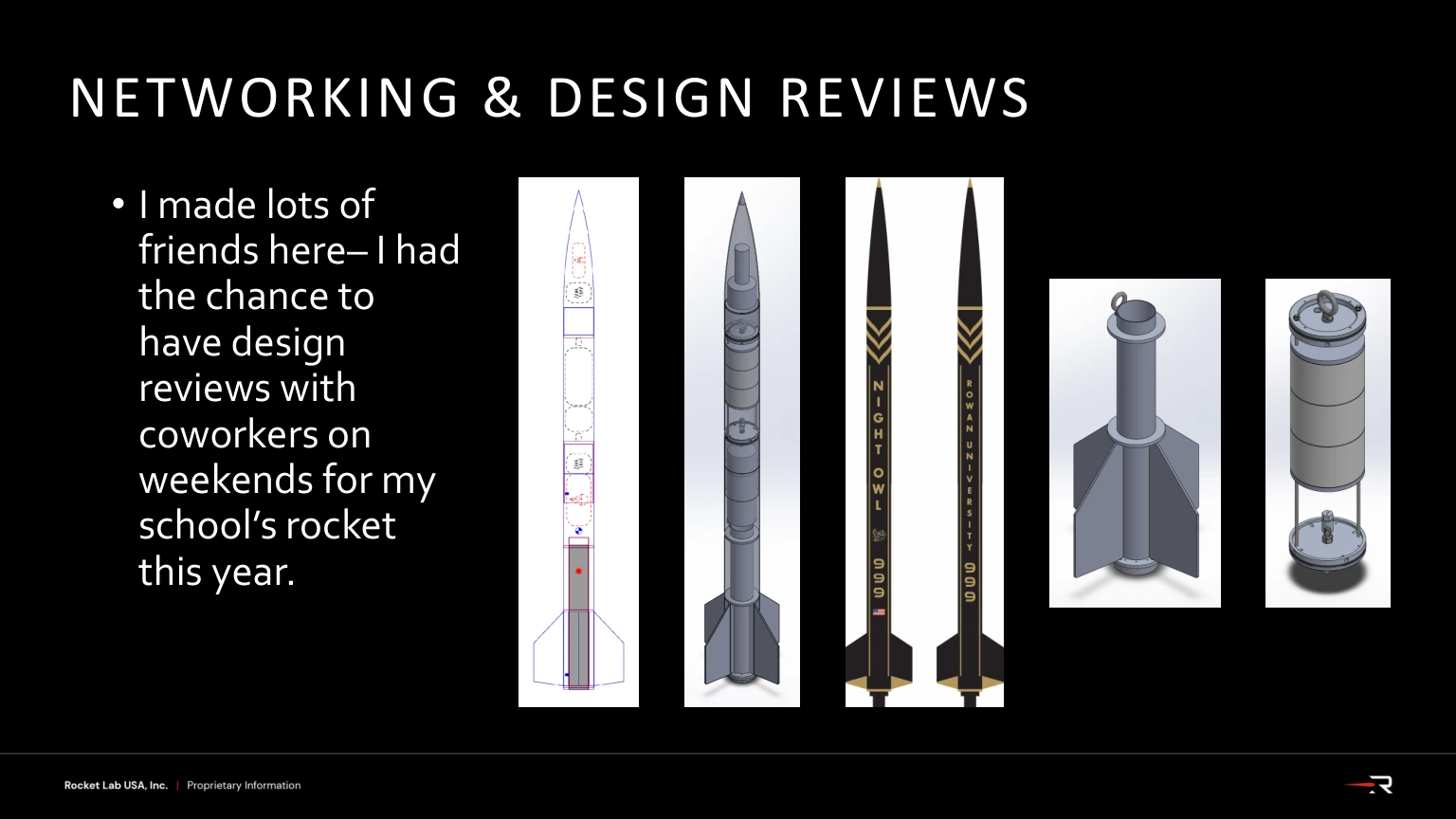
Coworkers also made time for informal design reviews of my school’s rocket. These conversations connected my internship experience with the engineering and leadership work I was preparing to take back to Rowan.
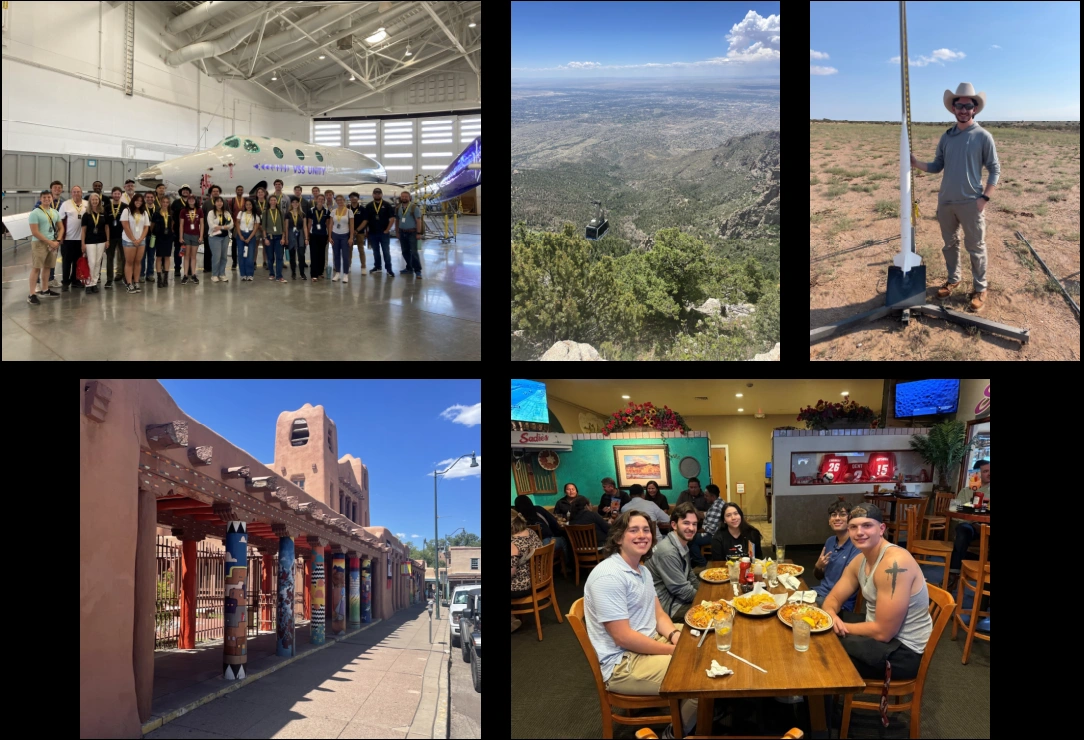
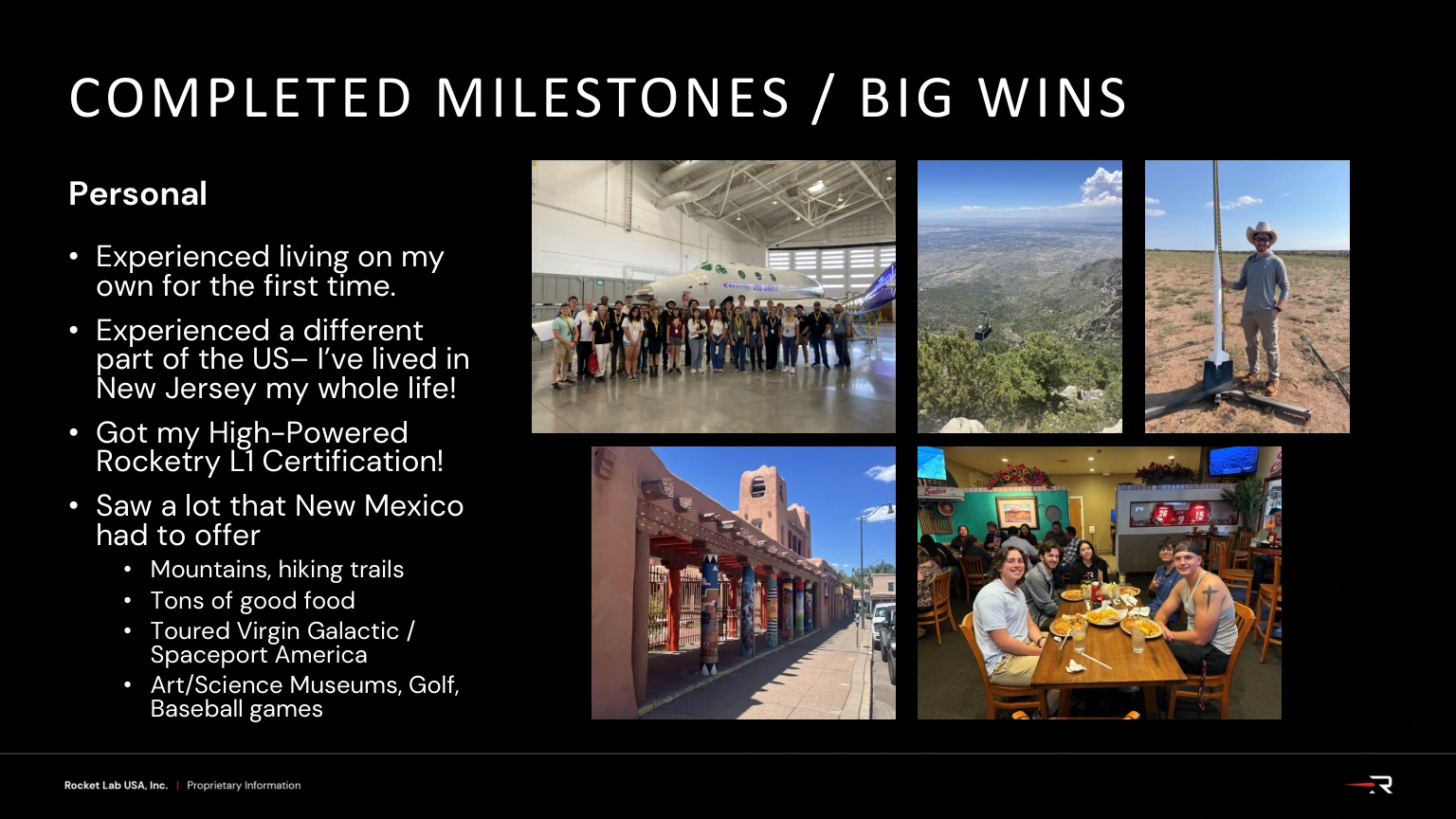
The summer gave me a chance to live in a new part of the country, explore New Mexico, visit aerospace sites, and earn my high-power rocketry Level 1 certification.
More experience turning requirements into hardware and installation documents, greater independence in technical coordination, and a clearer understanding of the infrastructure behind aerospace manufacturing.
08 / Full documentation
The complete 16-slide presentation covers my role, the facility context, technical contributions, project partners, timeline, and professional and personal milestones.
Every slide is included below with its original markings. Select an image for a larger view or use its slide link to open the PDF at that page.
Related engineering